Soil Fertility Basics for Irish Farmers
A practical guide to understanding soil fertility, nutrient management, and how to maintain productive soils in Irish farming systems.
Soil fertility is the ability of soil to supply the nutrients plants need for healthy growth. In Ireland, where farming depends heavily on grassland productivity and where input costs continue to rise, understanding fertility is essential for both production and profitability.
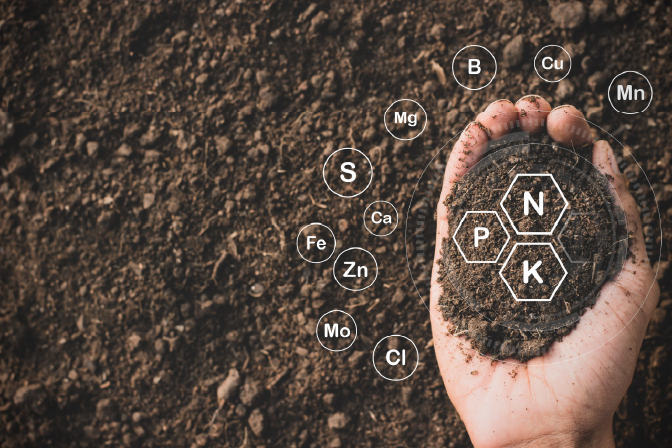
Here’s a practical look at the fundamentals of soil fertility - what nutrients matter, how they behave in Irish soils, and how to manage them effectively. It’s not about following complex formulas, but about understanding principles that help you make better decisions for your own land.
Getting fertility right is a balance. Under-fertilising limits production; over-fertilising wastes money and creates environmental problems. The goal is to match nutrient supply to what crops and grass actually need, based on what your soil already provides.
Who this guide is for
This is for Irish farmers and landowners seeking a practical understanding of soil fertility. It covers principles relevant to both grassland and tillage systems, and is useful for advisors, students, and anyone involved in nutrient management decisions.
What is soil fertility?
Soil fertility refers to the soil’s capacity to supply essential nutrients in the quantities and forms that plants require. A fertile soil provides a steady supply of nutrients throughout the growing season, supporting healthy plant development without excessive reliance on external inputs.
Fertility is not just about how much nutrient is present - it is about how much is available to plants. Nutrients can be locked up in forms plants cannot access, bound to soil particles, or present at the wrong depth. Effective fertility management considers availability, not just total content.
Soil fertility is influenced by:
- Inherent soil properties (texture, mineralogy, organic matter)
- Soil pH (which controls nutrient availability)
- Previous management (fertiliser history, cropping, organic inputs)
- Biological activity (which cycles nutrients from organic matter)
- Climate and weather (which affect nutrient movement and uptake)
A fertile soil is not necessarily one with high nutrient levels. Some soils with modest nutrient content are highly productive because those nutrients are available and well-cycled. Others with high total nutrients underperform because availability is limited.
Why soil fertility matters in Irish farming
Ireland’s farming systems create specific fertility considerations.
Grassland productivity
Grass is the foundation of most Irish farming. Maintaining productive swards requires adequate nutrition, particularly nitrogen, phosphorus, and potassium. Deficiencies limit grass growth, reduce stocking capacity, and increase reliance on purchased feed.
At the same time, Irish grassland systems involve significant nutrient cycling through grazing animals. Understanding this cycle helps optimise fertiliser use and reduce waste.
High rainfall effects
Ireland’s wet climate affects fertility in several ways:
- Leaching removes mobile nutrients, particularly nitrogen and potassium, from the root zone
- Waterlogging reduces nutrient uptake and can cause losses through denitrification
- High rainfall accelerates soil acidification, which affects nutrient availability
These factors mean that fertility management in Ireland requires attention to timing, form, and placement of nutrients - not just total amounts applied.
Input costs
Fertiliser represents a significant cost on most farms. Understanding which nutrients are actually limiting production helps target spending where it will have most impact. Applying nutrients that are already adequate is wasted money; failing to supply deficient nutrients limits returns.
Environmental context
Nutrient losses from farmland - particularly nitrogen and phosphorus - contribute to water quality problems. Managing fertility efficiently is not just economically sensible but increasingly expected as part of responsible land stewardship.
Key nutrients and their roles
Plants require many nutrients, but a few dominate fertility management in Irish agriculture.
Nitrogen (N)
Nitrogen drives vegetative growth - it is the nutrient most associated with green, leafy development. Grass and crop yields respond strongly to nitrogen supply, making it the nutrient most commonly applied.
Nitrogen is mobile in soil and does not persist for long. It must be supplied each growing season through fertiliser, slurry, or biological fixation (by clover and other legumes). Timing of nitrogen application is critical because it moves quickly through the system.
In grassland, nitrogen supply often determines how much grass grows. In tillage, nitrogen influences crop bulk and grain protein content.
Phosphorus (P)
Phosphorus is essential for root development, energy transfer, and reproductive growth. Unlike nitrogen, phosphorus is relatively immobile in soil - it binds to soil particles and does not leach readily.
This immobility means phosphorus builds up or depletes slowly over time. Soils with a history of adequate phosphorus supply maintain a reserve; those with a history of removal without replacement become depleted.
Phosphorus availability is strongly influenced by pH. In acidic soils, phosphorus becomes locked up with aluminium and iron; in very alkaline soils, it binds with calcium. Optimal availability occurs in the pH 6.0–7.0 range.
Potassium (K)
Potassium is important for water regulation, disease resistance, and overall plant vigour. It is the nutrient removed in largest quantities in silage, making silage ground particularly prone to depletion.
Potassium is moderately mobile - less so than nitrogen but more than phosphorus. Heavy clay soils hold potassium well; lighter soils are more prone to leaching losses.
Potassium deficiency often appears as reduced grass palatability and increased susceptibility to stress. It may also affect animal health, as potassium-deficient forage can have altered mineral profiles.
Secondary and trace elements
Beyond the major nutrients, plants require:
- Sulphur: Increasingly important as atmospheric deposition has declined
- Calcium and magnesium: Important for soil structure and plant nutrition
- Trace elements: Including copper, manganese, zinc, selenium, cobalt, and others
Deficiencies in these elements are less common than deficiencies in N, P, and K, but can significantly limit production when they occur. They are often addressed through targeted applications rather than routine fertiliser programmes.
Common fertility problems in Ireland
Several fertility issues appear repeatedly across Irish farms.
Phosphorus and potassium depletion
Decades of nutrient removal without adequate replacement have left many Irish soils deficient in phosphorus and potassium. This is particularly acute on silage ground, where large quantities of nutrients leave the field each cut.
Soil testing frequently reveals P and K levels below optimal, even on intensively managed farms. Correcting this depletion requires sustained attention over several years.
Poor pH limiting availability
Even when nutrients are present, low pH can prevent plants from accessing them. Phosphorus availability drops sharply below pH 6.0. Many Irish soils test acidic, meaning nutrient availability is compromised regardless of fertiliser inputs.
Correcting pH through liming is often the most cost-effective fertility intervention on acidic soils. Without adequate pH, other fertiliser applications deliver reduced value.
Imbalanced nutrition
Focusing on one or two nutrients while neglecting others can create imbalances. For example, heavy nitrogen use without adequate phosphorus and potassium produces weak, shallow-rooted plants vulnerable to stress.
Balanced fertility - supplying all nutrients in appropriate proportions - produces better results than maximising any single element.
Inefficient application timing
Nutrients applied at the wrong time may be lost before plants can use them. Nitrogen applied to waterlogged soils may be lost through denitrification. Fertiliser applied just before heavy rain may leach or run off.
Matching application timing to plant demand and weather conditions improves efficiency and reduces waste.
Reliance on fertiliser alone
Soil fertility depends on more than applied nutrients. Organic matter, soil biology, and physical structure all influence how well nutrients cycle and become available. Farms that neglect these factors often find they need increasing fertiliser inputs to achieve the same results.
Integrating organic matter management with nutrient application builds a more self-sustaining fertility system.
Practical fertility management
Effective fertility management combines soil testing, targeted application, and attention to the whole soil system.
For grassland systems
Test soil regularly. Sample fields every three to five years to track nutrient levels and pH. Use results to guide fertiliser and lime decisions rather than applying standard rates regardless of soil status.
Prioritise silage ground. Silage removes large quantities of nutrients, particularly potassium. These fields often need higher applications than grazed-only paddocks.
Credit organic sources. Slurry and farmyard manure supply significant nutrients. Account for their contribution when planning fertiliser applications to avoid over-supply.
Time nitrogen carefully. Apply nitrogen when grass is actively growing and can take it up quickly. Early spring applications on cold, wet soils are often poorly utilised.
Maintain clover. Clover fixes atmospheric nitrogen, reducing fertiliser requirements. Supporting clover through appropriate management - including adequate phosphorus and potassium - improves whole-system fertility.
Address pH first. If soils are acidic, correct pH before expecting full response from fertiliser applications. Lime is often the highest-return investment on acid soils.
For tillage systems
Match inputs to crop demand. Different crops have different nutrient requirements. Tailor applications to the specific crop rather than using generic rates across all fields.
Build soil indices. Aim to maintain phosphorus and potassium at optimal levels (typically index 3 in Irish classification). This provides a buffer against variation and ensures nutrients do not limit yield.
Use soil tests to guide decisions. Fertiliser recommendations based on soil test results are more efficient than standard recipes. Test before high-value or nutrient-demanding crops.
Consider placement. Placing fertiliser near seed or roots can improve efficiency compared to broadcast application, particularly for phosphorus, which is immobile in soil.
Incorporate organic matter. Crop residues, cover crops, and organic amendments contribute to nutrient cycling and soil biology. These support fertility alongside mineral fertiliser.
Rotate with legumes. Legume crops - including beans, peas, and clover leys - fix nitrogen and leave residual fertility for following crops. Including them in rotations reduces nitrogen fertiliser requirements.
When soil testing becomes important
Soil testing is the foundation of informed fertility management. Without testing, fertiliser decisions are based on assumptions that may not match reality.
Testing is particularly valuable when:
- Establishing a nutrient management plan for the farm
- Diagnosing unexplained poor crop or grass performance
- Planning applications for high-value or demanding crops
- Tracking whether current management is maintaining soil fertility
- Taking on new land with unknown history
Standard soil tests report pH, phosphorus, potassium, and often organic matter and other elements. Results are usually expressed as indices (1–4 scale in Ireland) indicating whether levels are deficient, low, adequate, or high.
Regular testing - typically every three to five years - allows tracking of trends. A single test gives a snapshot; repeated tests show whether fertility is building, stable, or declining under current management.
For more information on soil testing and interpretation, see our guide to interpreting soil test results.
Frequently asked questions
What are the main nutrients grass needs?
Grass requires nitrogen, phosphorus, and potassium in largest quantities. Nitrogen drives growth; phosphorus supports roots and tillering; potassium aids water regulation and stress tolerance. Secondary nutrients (sulphur, magnesium) and trace elements are also important but usually required in smaller amounts.
How do I know if my soil is fertile?
A soil test is the most reliable indicator. It will show levels of key nutrients and pH, and typically includes fertiliser recommendations. Visual assessment of crop growth can suggest problems but cannot identify specific deficiencies reliably.
Can I rely on slurry instead of fertiliser?
Slurry is a valuable nutrient source, but its nutrient content varies with diet, dilution, and storage. It typically supplies good potassium and moderate nitrogen and phosphorus. Depending on soil needs and slurry quality, supplementary fertiliser may or may not be necessary. Soil testing helps determine the balance.
Why doesn’t my fertiliser seem to work?
Common reasons include: low pH limiting nutrient availability; nutrients already adequate (so no response expected); poor timing or weather conditions at application; nutrient applied is not the one limiting growth; or soil structure problems restricting root access to nutrients.
How often should I soil test?
Every three to five years is appropriate for routine monitoring. More frequent testing may be useful when establishing new management approaches, diagnosing problems, or tracking correction of depleted soils.
What is the difference between soil index 1 and index 3?
In Irish soil testing, index 1 indicates deficiency requiring build-up applications; index 2 is low, still needing more than maintenance; index 3 is optimal, requiring only replacement of what crops remove; index 4 is high, where no application is needed. The goal is usually to maintain index 3.
Should I spread fertiliser before or after rain?
Light rain after application can help dissolve and incorporate granular fertiliser. Heavy rain, especially on sloping ground or saturated soils, increases runoff and loss. Very dry conditions reduce uptake until moisture arrives. Ideal conditions are moist soil with light rain forecast.
Where to go from here
Soil fertility is one component of soil health - closely linked to organic matter, biology, and physical structure. Managing fertility effectively requires understanding these connections, not just applying nutrients in isolation.
The starting point is knowing what your soil currently provides. A soil test gives you this baseline and guides targeted applications rather than guesswork. See our guide to interpreting soil test results for help understanding what your results mean. From there, attention to timing, balance, and integration with organic matter management builds a fertility system that is both productive and efficient.
Fertility management is a continuous process rather than a one-time task. Regular monitoring, responsive adjustment, and attention to the whole soil system maintain productive land for the long term.