Soil Health in Ireland: Basics & Benefits
An overview of soil health in Ireland - what it is, why it matters, and how to improve it for long-term farm resilience.
Soil health is the foundation of productive farming. In Ireland, where agriculture depends heavily on grassland and where rainfall shapes every aspect of land management, understanding your soil is essential for building a resilient farm.
This guide lays out what soil health means in an Irish context, why it matters for your land, and the practical steps that help over time.
Who this guide is for
This is for Irish farmers and landowners, whether you manage grassland, tillage, or mixed systems. It also serves as a useful reference for agricultural advisors, agribusiness professionals, and anyone involved in land management decisions.
What is soil health?
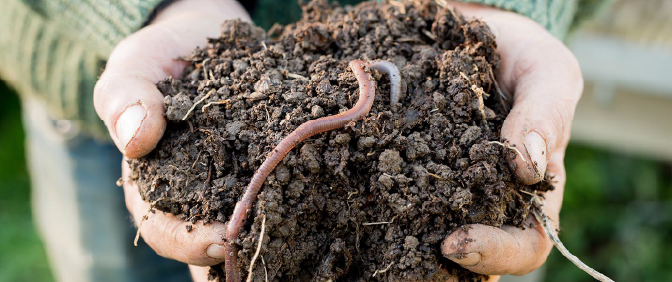
Soil health refers to the ability of soil to function as a living system. Healthy soil supports plant growth, cycles nutrients, holds water, and provides a home for billions of organisms, from earthworms to bacteria and fungi.
A healthy soil is not simply one with the right pH or nutrient levels. It is a soil where physical structure, biological activity, and chemical balance work together. When these elements are in sync, crops and grass grow more reliably, inputs work more efficiently, and the land becomes more resilient to weather extremes.
In practical terms, healthy soil:
- Absorbs and holds water during wet periods
- Releases water slowly during dry spells
- Allows roots to penetrate easily
- Supports nutrient cycling without excessive fertiliser dependence
- Resists erosion and compaction
Soil health is not a fixed state - it changes over time depending on how land is managed. That’s why regular observation and, where needed, soil testing matter.
Why soil health matters in Irish farming
Ireland’s climate presents both opportunities and challenges for soil management.
Rainfall and drainage
High rainfall - often exceeding 1,000mm per year in many areas - means Irish soils spend long periods wet or waterlogged. This puts pressure on soil structure, increases the risk of compaction, and can slow nutrient availability. Good soil health helps land cope with these conditions by improving infiltration and drainage capacity.
Grassland dominance
Roughly 80% of Irish agricultural land is under grass. Permanent pasture can build soil organic matter over time, but it also requires attention to compaction, especially in high-traffic areas. Soil health underpins grass productivity, animal carrying capacity, and the ability to extend the grazing season.
Tillage pressures
Tillage land faces different challenges. Repeated cultivation can break down soil structure, reduce organic matter, and leave fields vulnerable to erosion. Managing soil health in tillage systems requires deliberate attention to crop rotations, residue management, and minimising bare soil periods.
Soil type variation
Irish soils range from heavy clays in the midlands to lighter loams in the east and peaty soils in the west. Each type responds differently to management. Understanding your own soil - its texture, drainage characteristics, and organic matter levels - is the starting point for any improvement strategy.
Key components of healthy soil
Soil health can be understood through five main components. Each plays a role in how well your soil functions.
Soil structure
Structure refers to how soil particles clump together into aggregates. Well-structured soil has a mix of pore spaces - some large enough for water to drain, others small enough to hold moisture for plant roots.
Poor structure leads to compaction, waterlogging, and restricted root growth. You can assess structure by digging a small pit and observing how easily the soil breaks apart, whether roots penetrate evenly, and whether water drains or pools.
Organic matter
Organic matter is the fraction of soil made up of decomposed plant and animal material. It improves structure, increases water-holding capacity, feeds soil biology, and stores carbon.
Irish soils vary widely in organic matter content - from less than 3% in some tillage fields to over 10% in long-term pasture. Building organic matter is a slow process, but even small increases can have measurable benefits for soil function.
Soil biology
A teaspoon of healthy soil contains billions of bacteria, fungi, protozoa, and other organisms. These are not passive - they break down organic matter, cycle nutrients, suppress disease, and help create the glues that hold soil aggregates together.
Soil biology is often overlooked, but it is the engine that drives many soil functions. Practices that feed biology - through organic matter inputs, diverse rotations, and reduced disturbance - tend to improve overall soil health over time.
Nutrient balance
Plants need a range of nutrients to grow well. The major ones - nitrogen, phosphorus, and potassium - get most attention, but calcium, magnesium, sulphur, and trace elements also matter.
Healthy soil cycles nutrients efficiently. When biology is active and organic matter is adequate, nutrients become more available and less prone to leaching or lock-up. However, imbalances - too much of one nutrient relative to others - can cause problems even when total levels appear adequate.
Soil pH
pH measures how acidic or alkaline the soil is. Most crops and grasses perform best in a slightly acidic to neutral range (pH 6.0–7.0). Below this, some nutrients become less available; above it, others can become locked up.
In Ireland, soils often trend towards acidity due to high rainfall leaching calcium. Lime application is a common corrective, but the right rate depends on your current pH, soil type, and cropping system.
Common soil health problems in Ireland
Certain issues appear repeatedly on Irish farms. Recognising them is the first step towards addressing them.
Compaction
Compaction occurs when soil is compressed - usually by machinery or livestock traffic on wet ground. Compacted layers restrict root growth, slow drainage, and reduce the soil’s ability to breathe.
Signs include standing water after rain, poor crop or grass establishment, and shallow rooting visible when you dig. Compaction is easier to prevent than to cure, so timing field operations carefully matters.
Low organic matter
Tillage systems and intensive grazing can deplete organic matter faster than it builds. Low organic matter weakens structure, reduces water-holding capacity, and limits biological activity.
Organic matter takes years to build but can be lost quickly through over-cultivation, removal of crop residues, or soil erosion.
Poor drainage
Some Irish soils are naturally poorly drained due to heavy clay content or high water tables. Poor drainage slows soil warming in spring, limits grazing days, and creates conditions where nutrients are lost or unavailable.
Improving drainage often requires a combination of field drainage infrastructure and soil health practices that enhance natural infiltration.
Nutrient lock-up
Nutrients can become chemically unavailable in soils with very low or very high pH, or where imbalances between nutrients create competition for uptake. Phosphorus lock-up in acidic soils is a common example.
Addressing lock-up often starts with correcting pH and ensuring balanced nutrient applications based on soil test results.
pH imbalance
Acidic soils are widespread in Ireland due to leaching. Overliming can also occur, particularly on lighter soils. Regular pH testing helps you avoid both extremes and target lime applications where they will be most effective.
Practical steps to improve soil health
Improving soil health is a long-term process. There are no quick fixes, but consistent attention to a few key practices makes a real difference over time.
For grassland systems
Reduce compaction risk. Avoid trafficking wet fields. Where possible, use designated laneways and rotate grazing to give swards time to recover.
Maintain sward diversity. Consider including clover or herbs in reseeds. Diverse root systems explore more of the soil profile and support varied soil biology.
Manage grazing intensity. Overgrazing weakens plants, reduces root mass, and leaves soil exposed. Rotational grazing allows recovery and maintains ground cover.
Return organic matter. Slurry and farmyard manure, applied at the right rates and timing, feed soil biology and contribute to organic matter over time.
Test and lime as needed. Correcting pH is often the single most cost-effective intervention for improving nutrient availability and grass productivity.
For tillage systems
Minimise bare soil periods. Bare soil is vulnerable to erosion, nutrient loss, and structural damage. Cover crops, catch crops, or early establishment of the next cash crop all help.
Reduce tillage intensity where practical. Every pass with cultivation equipment breaks down aggregates and depletes organic matter. Minimum tillage or direct drilling may suit some situations.
Diversify rotations. Different crops have different root architectures and nutrient demands. Including break crops, especially legumes, this can improve soil biology and reduce pest and disease pressure.
Incorporate residues. Straw and crop residues feed soil organisms and contribute to organic matter. Where possible, chop and incorporate rather than burn or remove.
Monitor compaction. Use a spade to check for compaction layers, especially in wheelings and headlands. Address problems before they affect the whole field.
When soil testing becomes important
Observing your soil, digging holes, watching drainage and noting crop performance is valuable, but it only tells part of the story. Soil testing provides objective data on pH, nutrient levels, and organic matter content.
Testing is particularly useful when:
- You are planning a reseeding or significant crop change
- Grass or crop performance has declined without obvious cause
- You want to target fertiliser and lime applications more precisely
- You are considering changes to your management system
A good soil test gives you a baseline. Repeat testing every few years tracks whether your management is maintaining or improving soil health.
For help understanding test reports, see our guide to interpreting soil test results.
Frequently asked questions
How do I know if my soil is healthy?
Dig a hole and observe. Healthy soil breaks apart easily into crumb-like aggregates, has a mix of pore sizes, shows active roots throughout the profile, and has visible signs of life such as earthworms, root channels, organic matter. If soil smells sour, is waterlogged, or breaks into hard clods, there may be issues worth investigating.
Can I improve soil health quickly?
Some changes, like correcting pH with lime can show results within a season or two. Others, like building organic matter can take years of consistent practice. There are no overnight fixes, but steady attention pays off over time.
Is soil health the same as soil fertility?
Not quite. Fertility refers mainly to nutrient availability. Health is broader, it includes structure, biology, and the soil’s capacity to function as a system. A soil can be fertile but unhealthy (for example, high nutrients but compacted and biologically dead), and vice versa.
Does soil health affect animal performance?
Indirectly, yes. Healthy soils grow more productive and more nutritious grass, which supports animal health and performance. There is also growing interest in links between soil mineral balance, forage quality, and livestock health.
How often should I test my soil?
Every three to five years is a reasonable interval for routine monitoring. More frequent testing may be worthwhile during periods of significant management change or where problems are being addressed.
Do cover crops work in Ireland?
Cover crops can work well in Irish conditions, though species selection and establishment timing matter. They are most commonly used after cereals or before spring crops. Benefits include reduced erosion, improved organic matter, and nitrogen fixation (if legumes are included).
What role does regenerative farming play?
Regenerative approaches, such as reduced tillage, diverse rotations, integration of livestock and a focus on soil biology are fundamentally about building soil health over time. Many of the practices described in this guide align with regenerative principles.
Where to go from here
Soil health is a long game. The practices that build healthy soil, careful traffic management, organic matter additions, diverse rotations and regular testing require patience and consistency. But they also build resilience, reduce input costs over time, and leave land in better condition for the future.
If you would like to understand your current soil condition, consider getting a soil test from Teagasc or an accredited laboratory. A clear baseline makes it easier to set priorities and measure progress. See our guide to interpreting soil test results for help understanding what your results mean.