Soil Organic Matter: Why It Matters
A practical guide to understanding soil organic matter, its role in Irish farming systems, and how to build and maintain it.
Soil organic matter is one of the most important indicators of soil quality. It influences everything from water retention to nutrient cycling, and plays a central role in determining how productive and resilient your land can be.
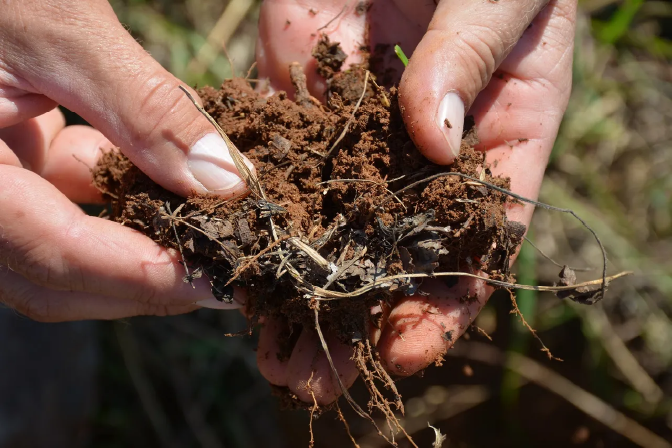
In Ireland, organic matter levels vary widely - from less than 3% in some intensively cultivated tillage soils to over 15% in long-term pasture and peat-influenced areas. Understanding what organic matter does and how to manage it is essential for any farmer interested in long-term soil performance.
This guide breaks down what organic matter is, why it matters in Irish conditions, and the practical steps that help build and maintain it over time. Building organic matter is slow work, but the benefits accumulate steadily and persist for years.
Who this guide is for
This is for Irish farmers and landowners seeking to understand the role of organic matter in their soils. It’s relevant to both grassland and tillage systems, and useful for advisors, students, and anyone involved in land management decisions.
What is soil organic matter?
Soil organic matter is the portion of soil made up of living organisms, fresh plant and animal residues, and decomposed material called humus. It is the dark-coloured fraction that gives healthy topsoil its characteristic appearance.
Organic matter is not a single substance but a complex mix of materials at different stages of decomposition:
- Living organisms: Bacteria, fungi, earthworms, insects, and plant roots
- Fresh residues: Recently added plant material, manure, and crop debris
- Decomposing material: Partially broken-down organic matter being processed by soil life
- Humus: Stable, well-decomposed material that persists in soil for years or decades
Humus - the stable fraction - is what soil tests typically measure when reporting organic matter percentage. It accumulates slowly but provides long-lasting benefits to soil function.
Organic matter content is usually expressed as a percentage of soil weight. Irish mineral soils typically range from 2% to 10%, with higher values in permanent pasture and lower values in frequently cultivated land.
Why organic matter matters in Irish farming
Organic matter influences almost every aspect of how soil functions. In Irish conditions, several of these effects are particularly important.
Water management
Ireland’s climate brings both abundant rainfall and periodic dry spells. Organic matter helps with both extremes:
- It improves soil structure, allowing water to infiltrate rather than run off or pool
- It increases water-holding capacity, storing moisture for plants during drier periods
- It supports drainage by maintaining pore spaces that allow excess water to move through the profile
Soils low in organic matter tend to waterlog more readily in wet conditions and dry out faster during dry spells. Building organic matter creates a more resilient system.
Nutrient cycling
Organic matter is the main reservoir of soil nitrogen, and contains significant amounts of phosphorus, sulphur, and other nutrients. As it decomposes, these nutrients are gradually released in forms plants can use.
This slow-release effect reduces dependence on fertiliser inputs and provides nutrients throughout the growing season rather than in a single pulse. It also reduces the risk of nutrient leaching, as nutrients bound in organic matter are less mobile than those in mineral form.
Soil structure
Organic matter helps soil particles stick together into stable aggregates - the crumb-like structures that create good tilth. These aggregates:
- Resist compaction
- Create a mix of pore sizes for air, water, and roots
- Make soil easier to work
- Reduce erosion risk
Soils low in organic matter often form crusts, compact easily, and are harder to cultivate. The structural benefits of organic matter take years to build but persist as long as organic matter levels are maintained.
Biological activity
Organic matter feeds soil organisms. A soil rich in organic matter supports more bacteria, fungi, earthworms, and other creatures that drive nutrient cycling, disease suppression, and structural development.
This biological activity is not just a consequence of organic matter - it is also a cause. Soil organisms break down fresh residues and create humus. A well-fed soil biology builds and maintains organic matter more effectively than a depleted one.
Carbon storage
Organic matter is approximately 58% carbon by weight. Building organic matter means storing carbon in the soil rather than releasing it to the atmosphere. This has implications beyond the farm, but the practical benefit for farmers is that carbon-rich soils are generally more productive and resilient soils.
Key concepts in organic matter management
Understanding how organic matter behaves helps inform management decisions.
Inputs and losses
Organic matter levels reflect the balance between what goes in and what goes out:
Inputs include:
- Plant roots and residues
- Manure and slurry
- Compost and other amendments
- Cover crops and green manures
Losses include:
- Decomposition (natural biological breakdown)
- Erosion (physical removal of topsoil)
- Intensive cultivation (accelerates decomposition)
- Removal of crop residues
Maintaining or building organic matter requires that inputs exceed losses over time. This is easier in some systems than others.
The role of grassland
Permanent grassland naturally builds organic matter through continuous root turnover and minimal soil disturbance. Grass roots die and regrow constantly, feeding carbon into the soil. Without cultivation to accelerate decomposition, this carbon accumulates as stable humus.
This is why long-term pasture typically has higher organic matter than tilled land, and why converting tillage to grass gradually rebuilds organic matter levels.
The challenge of tillage
Tillage accelerates organic matter loss by:
- Exposing soil to air, which speeds oxidation of carbon
- Breaking up aggregates that protect organic matter from decomposition
- Mixing topsoil with lower layers, diluting organic matter concentration
- Removing crop residues that would otherwise contribute to soil carbon
This does not mean tillage is incompatible with maintaining organic matter, but it does mean tillage systems need deliberate management to counteract these losses.
Rate of change
Organic matter changes slowly. Building levels by 0.1% per year would be an excellent rate of increase - and that small annual change can take years of consistent management to achieve.
Similarly, losses accumulate gradually. A field converted from pasture to tillage may take decades to fully deplete its organic matter reserves, though the fastest losses occur in the early years.
This slow pace means organic matter management is a long-term commitment. Results will not be visible next season, but they will compound over years and decades.
Common organic matter problems in Ireland
Several issues related to organic matter appear regularly on Irish farms.
Depleted tillage soils
Continuous arable cropping, particularly with residue removal and limited organic inputs, can deplete organic matter to very low levels. Soils below 3% organic matter often exhibit poor structure, reduced water-holding capacity, and lower biological activity.
Reversing this depletion requires sustained effort over many years. In severe cases, temporary conversion to grass may be the most effective approach.
Compaction masking organic matter benefits
Even soils with adequate organic matter can underperform if compaction restricts root growth and water movement. Addressing compaction may be necessary before organic matter improvements show their full benefit.
Over-reliance on fertiliser
On soils low in organic matter, the nutrient-cycling function is reduced, making the system more dependent on fertiliser inputs. This can create a cycle where intensive fertiliser use without organic returns further depletes soil biology and organic matter.
Breaking this cycle requires deliberate organic matter building alongside nutrient management.
Misunderstanding test results
Organic matter percentages vary with soil type and land use history. Comparing a peat-influenced soil with a free-draining mineral soil is not meaningful. What matters is whether your organic matter level is appropriate for your soil type and whether it is stable, increasing, or declining over time.
Tracking trends through repeated testing is more valuable than focusing on absolute numbers.
Practical organic matter management
Building and maintaining organic matter requires attention to both inputs and losses.
For grassland systems
Maintain permanent pasture where practical. The longer land stays in grass without cultivation, the more organic matter builds. Frequent reseeding interrupts this accumulation.
Manage grazing to maintain ground cover. Overgrazing reduces root mass and leaves soil exposed. Rotational grazing that allows recovery maintains the plant growth that feeds organic matter accumulation.
Return organic matter through manure and slurry. Farmyard manure and slurry are significant organic matter sources. Apply at rates and times that maximise incorporation into soil rather than loss through runoff or volatilisation.
Include diverse species in reseeds. Deep-rooted species like chicory and plantain, along with clover, contribute organic matter at different soil depths and support diverse soil biology.
Avoid unnecessary cultivation. Every tillage pass accelerates organic matter loss. Where reseeding is needed, consider minimum-till or direct drilling approaches where conditions suit.
For tillage systems
Retain and incorporate crop residues. Straw, stubble, and crop debris are organic matter sources. Chopping and incorporating rather than burning or removing keeps this carbon in the system.
Use cover crops. Cover crops between cash crops add biomass, keep roots active, and protect soil from erosion. The more diverse the cover crop mix, the more varied the organic matter inputs.
Diversify rotations. Different crops contribute different amounts and types of organic matter. Including grass leys in arable rotations, even for a few years, can significantly boost organic matter levels.
Apply organic amendments. Farmyard manure, compost, and other organic materials supplement what crops leave behind. These are particularly valuable on farms without livestock.
Reduce tillage intensity where practical. Minimum tillage and direct drilling disturb soil less than conventional ploughing, slowing organic matter oxidation. Not all situations suit these approaches, but where they work, they help maintain organic matter.
Avoid leaving soil bare. Bare soil loses organic matter through oxidation and erosion without gaining any through plant growth. Keep something growing or residues covering the surface as much of the year as possible.
When soil testing becomes important
Organic matter is a standard component of most soil tests, providing a snapshot of your current level. Testing is particularly useful when:
- You are establishing a baseline for new or unfamiliar land
- You want to track whether management changes are affecting organic matter over time
- You are diagnosing soil quality problems related to structure, water-holding, or biology
- You are comparing fields with different management histories
Because organic matter changes slowly, frequent testing is not necessary. Sampling every three to five years is sufficient to track meaningful trends.
Interpretation requires context. Compare your results with typical values for your soil type and land use, and track changes over time rather than focusing on single measurements.
For help understanding what your test results mean, see our guide to interpreting soil test results.
Frequently asked questions
What is a good organic matter percentage?
It depends on soil type and land use. For mineral soils in Ireland, 4–6% is often considered adequate for tillage, while permanent grassland commonly reaches 6–10% or higher. Peat-influenced soils will be higher still. What matters most is whether levels are stable or improving under your management.
How long does it take to build organic matter?
Organic matter builds slowly - often less than 0.1% per year even with good management. Significant improvements may take a decade or more to achieve. However, some benefits of adding organic matter - like improved biological activity - appear more quickly than changes in measured percentage.
Does adding manure increase organic matter?
Yes, but not as much as you might expect. Much of the organic material in manure decomposes within a year or two. Only a fraction becomes stable humus. Consistent application over many years is needed to meaningfully raise organic matter levels.
Can I build organic matter while still tilling?
Yes, but it is more difficult than in grassland systems. Reducing tillage intensity, retaining residues, using cover crops, and applying organic amendments can maintain or slowly build organic matter even in arable rotations. The key is ensuring inputs exceed losses.
Why does organic matter vary across my farm?
Variation reflects differences in soil type, drainage, past management, and land use history. Areas with different histories - such as former woodland, old pasture, or intensively tilled fields - will have different organic matter levels even if managed the same way now.
Does organic matter affect fertiliser efficiency?
Yes. Soils high in organic matter cycle nutrients more effectively, reducing the amount of fertiliser needed to achieve the same result. They also buffer against nutrient loss through leaching. Low organic matter soils often require more fertiliser and use it less efficiently.
Should I buy compost to build organic matter?
Imported compost can supplement farm-generated organic matter, but cost and availability often limit its practicality at field scale. For most farms, managing what you already have - residues, manure, cover crops - is more realistic than relying on purchased inputs.
Where to go from here
Organic matter is central to soil health - it underpins structure, biology, water management, and nutrient cycling. Building and maintaining organic matter is one of the most valuable long-term investments a farmer can make.
The first step is understanding where you stand. A soil test provides your current organic matter level and other information useful for management decisions. Repeated tests over time track whether your approach is working.
From there, focus on the practical steps that fit your system: returning residues, managing grazing, adding organic amendments, reducing unnecessary disturbance. The changes will not show immediately, but they compound over years into more resilient, productive soil.