Soil pH Guide: What It Means for Irish Farms
A practical guide to understanding soil pH, why it matters for Irish agriculture, and how to manage it effectively.
Soil pH is one of the most important factors influencing how well crops and grass grow. In Ireland, where high rainfall naturally acidifies soils over time, understanding and managing pH is essential for productive farming.
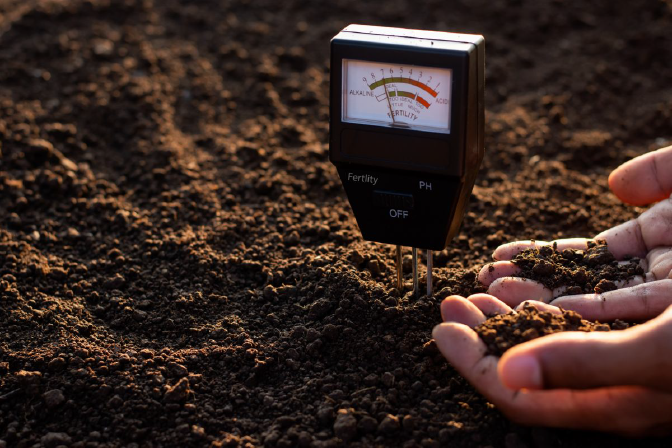
This guide breaks down what soil pH means, why it matters in Irish conditions, and how to approach pH management in a practical way. It’s not about following rigid formulas - it’s about understanding the principles so you can make informed decisions for your own land.
Getting pH right is often one of the most cost-effective interventions a farmer can make. Yet it is also one of the most commonly overlooked, with many fields operating well below optimal levels without the farmer realising.
Who this guide is for
This is for Irish farmers and landowners managing grassland or tillage systems. It’s also useful for agricultural advisors, students, and anyone involved in soil management decisions. The focus is on practical understanding rather than technical chemistry.
What is soil pH?
Soil pH is a measure of how acidic or alkaline your soil is. The scale runs from 0 to 14, with 7 being neutral. Values below 7 indicate acidity; values above 7 indicate alkalinity.
In practice, agricultural soils in Ireland typically range from about 4.5 (very acidic) to 7.5 (slightly alkaline). Most crops and grasses perform best in the range of 6.0 to 7.0 - slightly acidic to neutral.
The pH scale is logarithmic, which means each whole number represents a tenfold change in acidity. A soil with pH 5.0 is ten times more acidic than one with pH 6.0, and a hundred times more acidic than one with pH 7.0. This is why small changes in pH can have significant effects on plant growth.
pH influences almost everything that happens in the soil:
- Nutrient availability
- Soil biology activity
- Root development
- Fertiliser efficiency
- Earthworm populations
Understanding your soil’s pH is the starting point for effective nutrient management. Without this knowledge, other interventions may be less effective or even counterproductive.
Why soil pH matters in Irish farming
Ireland’s climate creates specific challenges for pH management that differ from drier regions.
Natural acidification
High rainfall - often exceeding 1,000mm annually in many areas - leaches calcium and magnesium from the soil over time. These are the elements that keep soil pH in the neutral range. As they wash out, soils naturally become more acidic. This process is continuous, meaning pH management is an ongoing requirement rather than a one-time fix.
Fertiliser effects
Nitrogen fertilisers, particularly ammonium-based products, contribute to soil acidification. The more nitrogen applied, the faster pH tends to decline. This means productive, intensively managed land often acidifies more quickly than extensive systems.
Soil type variation
Different soil types have different buffering capacities - their ability to resist pH change. Heavy clay soils and those high in organic matter tend to resist acidification longer, but also require more lime to correct once they become acidic. Sandy soils acidify more quickly but respond faster to liming.
Impact on nutrients
Soil pH directly affects which nutrients plants can access. Phosphorus availability drops sharply below pH 6.0, becoming increasingly locked up in forms plants cannot use. Many trace elements behave similarly. At very low pH levels, aluminium and manganese can become toxic to plant roots.
This means that in acidic soils, you can apply fertiliser but see little benefit - the nutrients are there, but plants cannot access them. Correcting pH often delivers more value than additional fertiliser on acid soils.
Key concepts in pH management
Understanding a few key principles makes pH management more straightforward.
Optimal pH ranges
Different crops and land uses have different optimal pH ranges:
- Permanent grassland: pH 6.0–6.5
- Rotational grassland: pH 6.3–6.5
- Tillage crops (most): pH 6.5–7.0
- Potatoes: pH 5.5–6.0 (lower to reduce scab risk)
- Beet crops: pH 7.0 or above
These are guidelines rather than rigid targets. The goal is to keep pH within a range where nutrient availability is good and plant growth is not constrained.
Lime and liming
Lime is the primary tool for raising soil pH. Agricultural lime (ground calcium carbite) supplies calcium and neutralises acidity. Magnesium lime (dolomitic limestone) also supplies magnesium, which may be beneficial on soils deficient in this element.
The amount of lime needed depends on:
- Current pH
- Target pH
- Soil type and buffering capacity
- Organic matter content
Lighter soils need less lime to achieve the same pH change. Heavier soils and those with more organic matter require more. A soil test will typically include a lime requirement recommendation based on these factors.
Timing and application
Lime works slowly - it takes months or even years to fully react with the soil. For best results:
- Apply lime well ahead of when you need the pH change (ideally 6–12 months before reseeding or sowing)
- Incorporate lime into the soil where possible, rather than leaving it on the surface
- Avoid applying lime at the same time as slurry or nitrogen fertiliser, as this can cause nitrogen loss
- Little and often is generally better than infrequent heavy applications
Maintenance vs correction
There is a difference between correcting a pH problem and maintaining optimal pH. Correction requires larger lime applications to bring pH up from an acidic state. Maintenance involves smaller, regular applications to counteract ongoing acidification.
Once you have achieved your target pH, regular smaller applications - often every three to five years - prevent the problem from recurring.
Common pH problems in Ireland
Certain issues appear repeatedly across Irish farms. Recognising them helps focus attention where it matters.
Undiagnosed acidity
Many fields are more acidic than farmers realise. Without regular testing, pH can drift downward over years without obvious symptoms until productivity is noticeably affected. By this point, significant yield potential has already been lost.
The only reliable way to know your soil pH is to test it. Visual assessment of the crop is not sufficient - by the time acidity symptoms appear, the problem is usually severe.
Uneven application
Lime spreaders can leave uneven coverage, resulting in strips of corrected and uncorrected soil within the same field. This shows up as uneven crop growth and can persist for years. Careful calibration and overlapping passes help avoid this issue.
Under-liming
Applying less lime than needed is common, often due to cost concerns. However, under-liming means the investment delivers only partial benefit. It is generally better to prioritise fields and lime them properly than to spread insufficient lime across all fields.
Over-liming
While less common than under-liming, applying too much lime - particularly on lighter soils - can push pH too high. This creates different nutrient availability problems, particularly for trace elements like manganese, copper, and zinc. Very high pH also suits certain diseases in some crops.
Ignoring spatial variation
pH can vary significantly within a single field, especially in fields with variable soil types or drainage patterns. A single composite sample may mask problem areas. Where variation is suspected, targeted sampling or precision mapping helps identify areas needing different treatment.
Practical pH management
Managing pH effectively requires a systematic approach rather than reactive interventions.
For grassland systems
Test regularly. Sample grassland fields every three to five years to track pH trends. Use the results to plan lime applications.
Prioritise silage ground. Fields cut for silage export more nutrients and tend to acidify faster. These often need more frequent attention than grazed-only fields.
Time applications carefully. Apply lime when ground conditions allow even spreading without compaction. Avoid very wet conditions. Spring or autumn applications are common, depending on the farming system.
Consider grazing animals. Heavy lime applications can affect grass palatability temporarily. Where possible, allow rain to wash lime into the soil before grazing resumes.
Factor in slurry. Slurry has a mild liming effect over time due to its calcium content. However, this is rarely sufficient to substitute for lime on acidic soils.
For tillage systems
Test before major crops. Sample and test ahead of high-value or pH-sensitive crops like beet or barley. This allows time for lime to take effect.
Incorporate where practical. Cultivation mixes lime into the soil profile, speeding its effect. Surface-applied lime on no-till or minimum-till systems works more slowly.
Plan rotations with pH in mind. If growing crops with different pH preferences, consider how liming decisions affect the whole rotation, not just the immediate crop.
Watch for problem patches. Variable emergence or growth in tillage crops can indicate pH variation within the field. Investigate with targeted soil samples before assuming nutrient deficiency.
Balance trace elements. As pH rises towards 7.0 and above, watch for trace element deficiencies, particularly manganese in cereals. Foliar applications may be needed to supplement soil supply.
When soil testing becomes important
You cannot manage pH effectively without knowing what it is. Soil testing provides the baseline information needed for informed decisions.
Testing is particularly valuable when:
- Planning a reseed or significant crop change
- Fertiliser applications seem less effective than expected
- Crop or grass performance has declined without obvious cause
- You have not tested a field in more than five years
- You are taking on new land or fields with unknown history
A standard soil test will report pH alongside nutrient levels, and typically includes a lime recommendation based on your current pH and target land use.
For help understanding what your test results mean, see our guide to interpreting soil test results.
Frequently asked questions
How do I know if my soil is too acidic?
The only reliable method is a soil test. Visual symptoms - like poor clover growth, uneven grass colour, or reduced earthworm activity - can suggest acidity, but other factors cause similar effects. Testing removes the guesswork.
How quickly does lime work?
Lime takes time to dissolve and react with soil acidity. Noticeable effects may take six months to a year, with full effect developing over two to three years. Finer lime particles react faster than coarse ones. Plan ahead rather than expecting immediate results.
Can I apply too much lime?
Yes. Over-liming pushes pH too high, which creates different nutrient availability problems. This is more of a risk on light, sandy soils with low buffering capacity. Follow soil test recommendations rather than applying lime by guesswork.
Should I use calcium lime or magnesium lime?
Standard calcium lime suits most situations. Magnesium lime (dolomitic limestone) is appropriate where soil tests indicate magnesium deficiency alongside low pH. Using magnesium lime routinely when magnesium is adequate can create nutrient imbalances.
How often should I test soil pH?
Every three to five years is reasonable for most fields under normal management. More frequent testing may be worthwhile during correction programmes or where pH problems have been identified.
Does organic matter affect pH?
Organic matter has some buffering effect, helping to resist rapid pH changes in either direction. Soils high in organic matter typically need more lime to achieve the same pH increase. However, organic matter alone cannot prevent acidification - lime is still needed.
Why does my field have uneven growth even after liming?
This often indicates uneven lime distribution - either from the original application or from underlying soil variation. Targeted sampling of good and poor areas can identify whether pH is the cause. If so, spot liming the affected areas may help.
Where to go from here
Soil pH is a fundamental aspect of soil health that affects almost every other aspect of soil function. Getting pH into the right range is often the single most cost-effective intervention on farms with acidic soils.
The first step is knowing where you stand. If you have not tested recently, consider getting a soil test from Teagasc or an accredited laboratory to establish your current pH and nutrient status. With this information, you can make informed decisions about lime requirements and timing.
Managing pH is a long-term commitment rather than a one-time task. Regular testing, planned applications, and attention to acidification sources will keep your soil in the range where crops and grass can perform at their best.